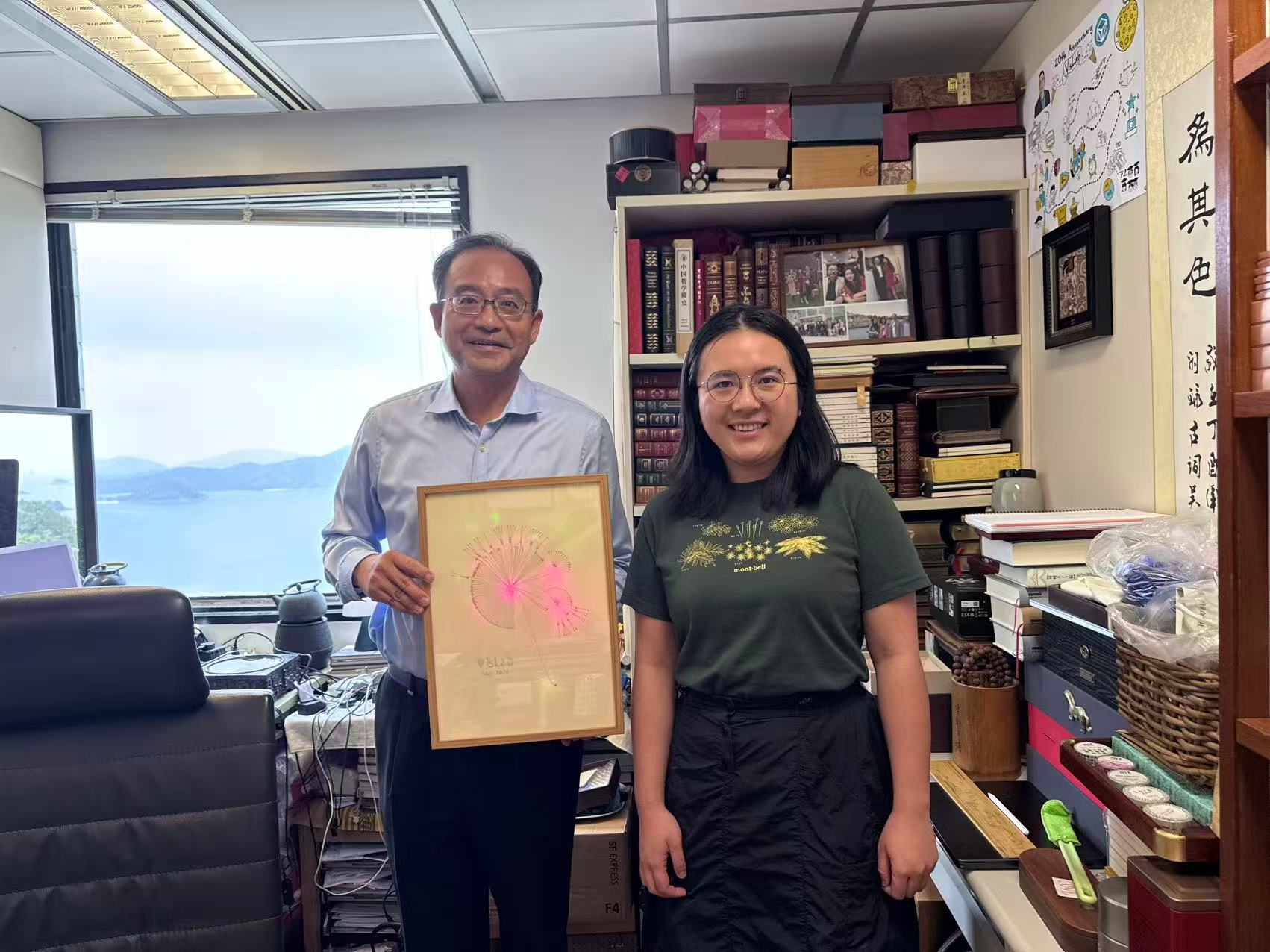
I made a lighting installation visualizing the VisLab family as a graduation gift for Prof. Qu.
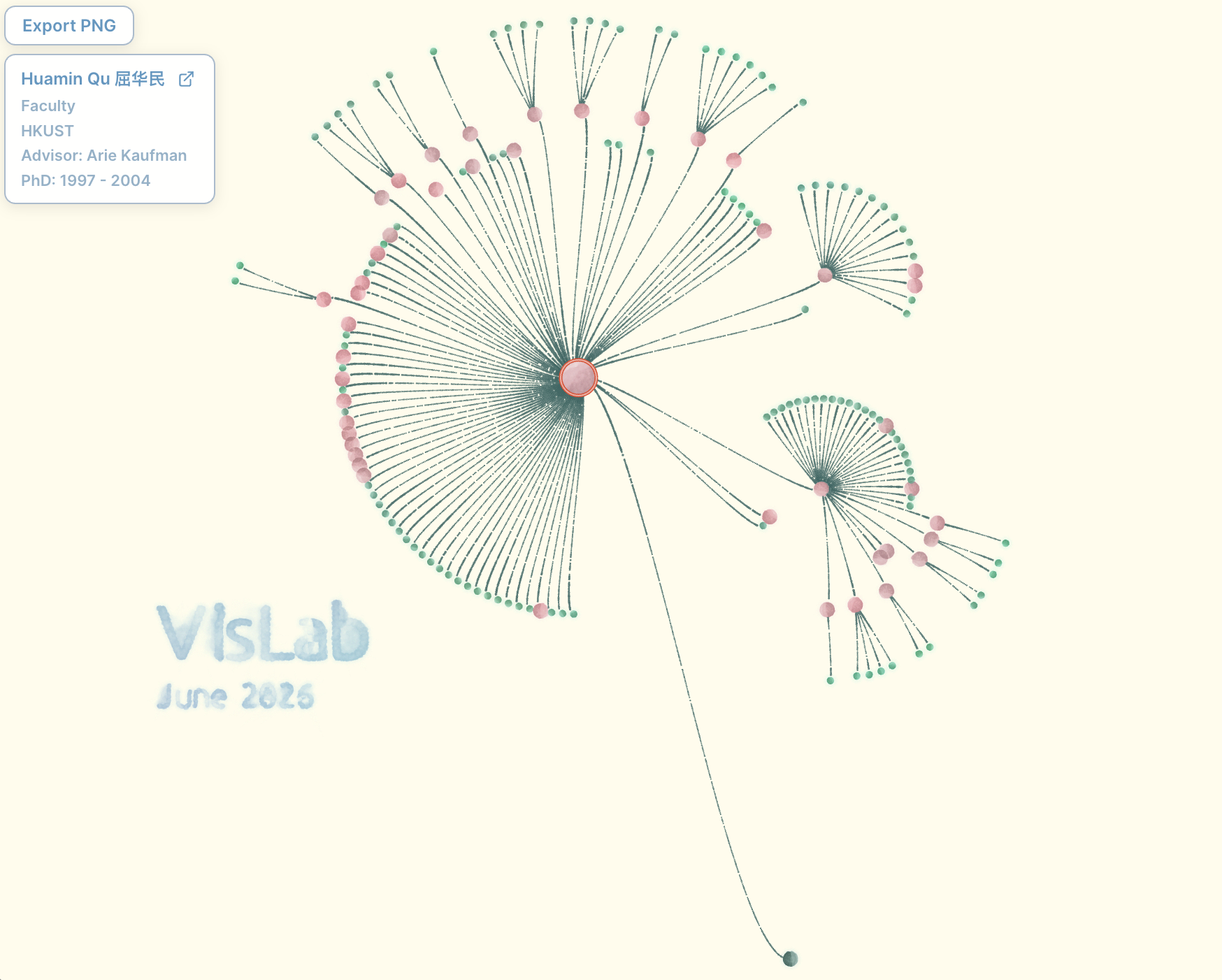
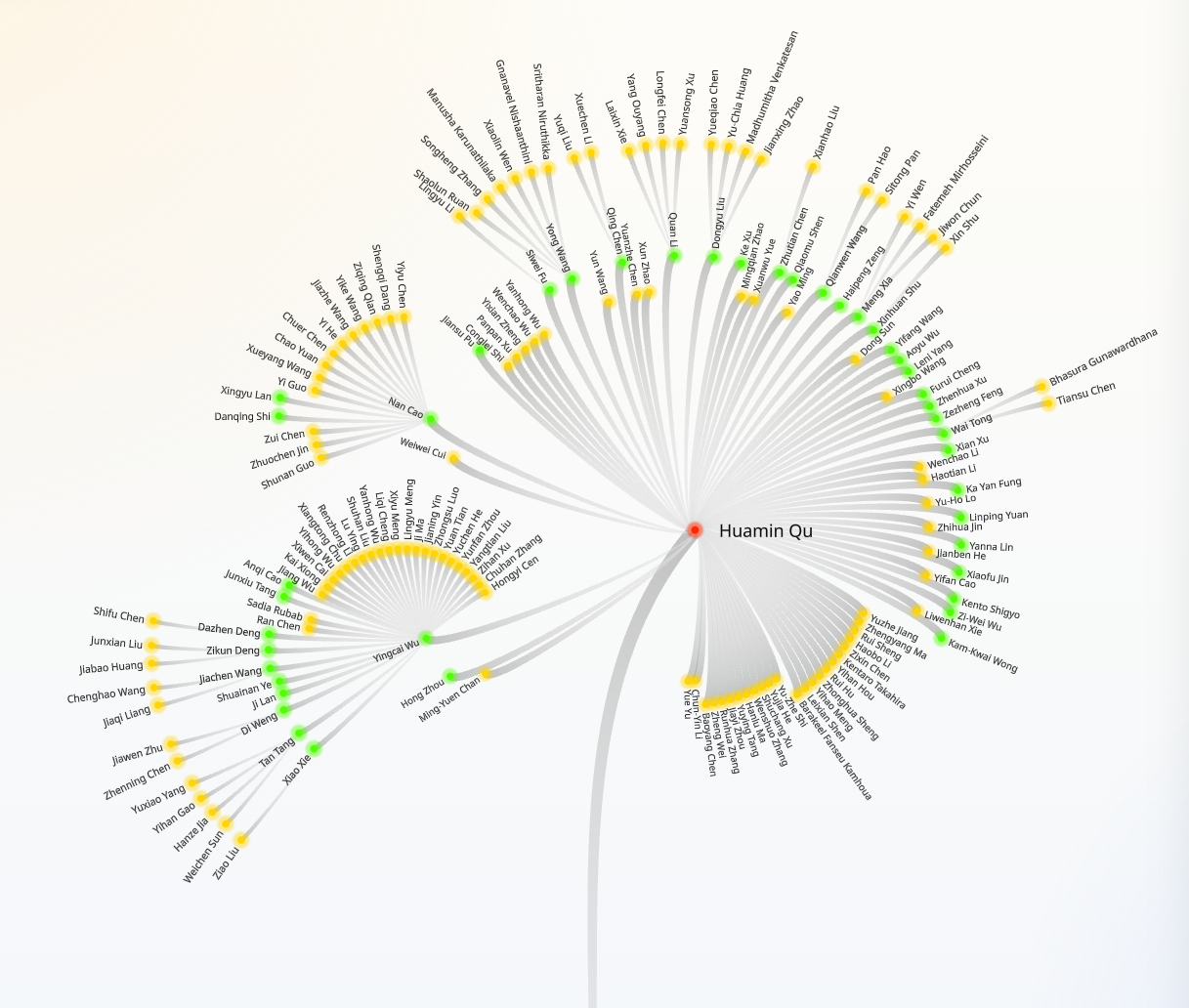
In this metaphorical visualization, the dandelion seeds are arranged along a spiral. Each seed represents a Ph.D. student and is connected to their mentor. The pink seeds indicate people who have remained in academia. The dark green node represents Arie Kaufman, our academic grandpa, and the large pink node represents our advisor, Huamin Qu.
When the installation is switched on, Arie and Huamin are lighted up. And there are breathing lights in the background. If you blow on the dandelion, the seeds spread out like a real dandelion, then everything is lighted up.
Video demo of the dandelion light
Motivation
There is a tradition in our lab that graduates prepare a DIY gift for our mentor when leaving. I have planned for this since day one of my Ph.D. But the more I wanted it to be perfect, the easier it became to put it off. After I obtained my degree and my departure date drew near, I knew I could no longer postpone it.
Ideation
My inspiration came from Jie Qi’s Pu Gong Ying Tu. In this MoMA-exhibited work, traditional Chinese painting is combined with colorful bulbs underneath the canvas, which respond to sound interaction. The lighting animation immediately brings liveliness to the otherwise static painting.
However, dandelions by themselves have little to do with Prof. Qu or VisLab. A playful installation alone would not be meaningful enough as a gift, especially for someone I have known for eight years and learned so much from. Besides, simply replicating an existing project would not be novel at all — that would be almost a letdown for someone with a Ph.D. in visualization and HCI!
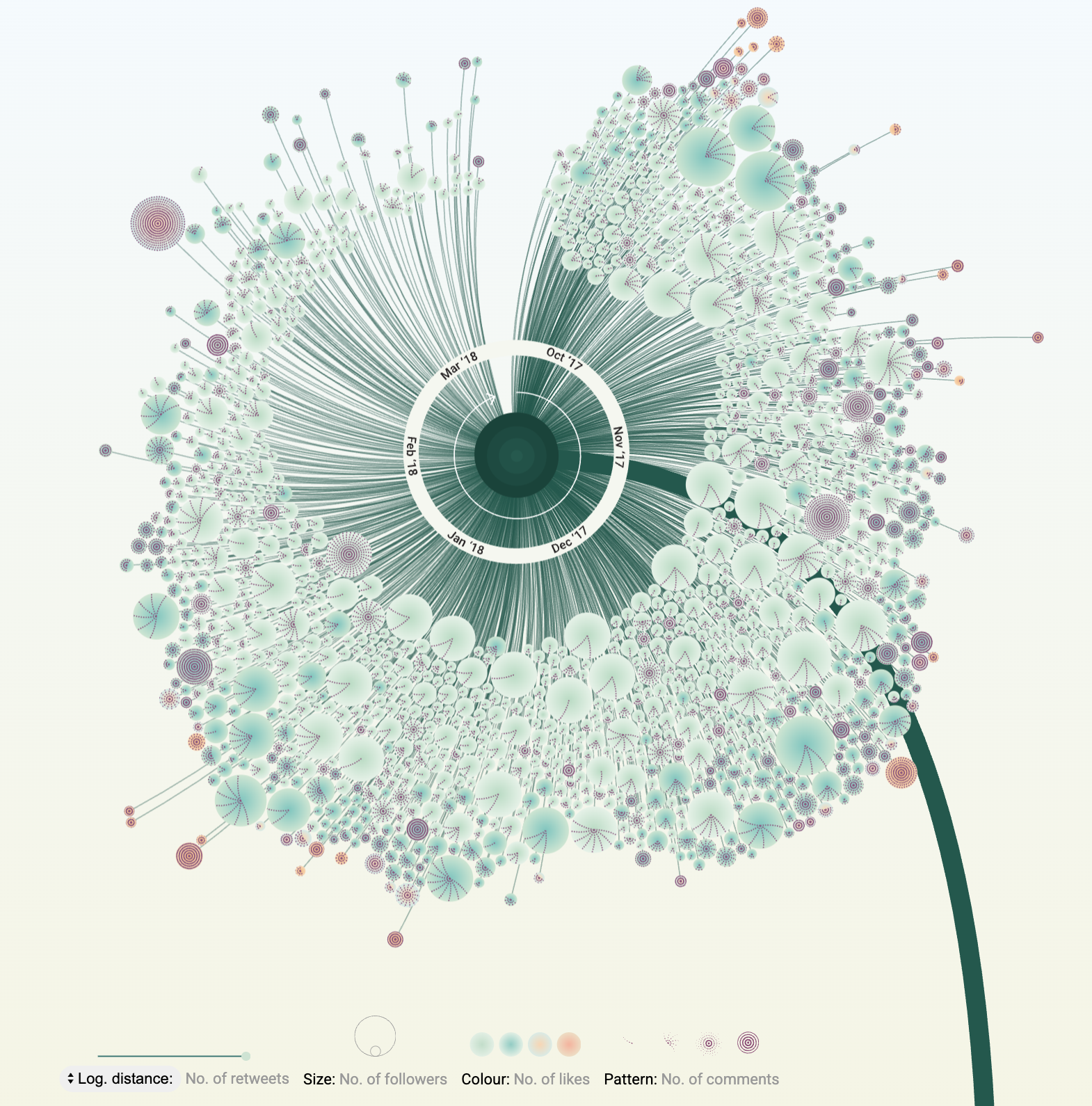
Then Jason, Hanlu, and I had some discussions. We recalled a visualization artwork, Trending Seeds, by Valentina D’Efilippo and Lucia Kocincova, where tweets are encoded as dandelion seeds. Maybe VisLab members could be encoded in a similar way!
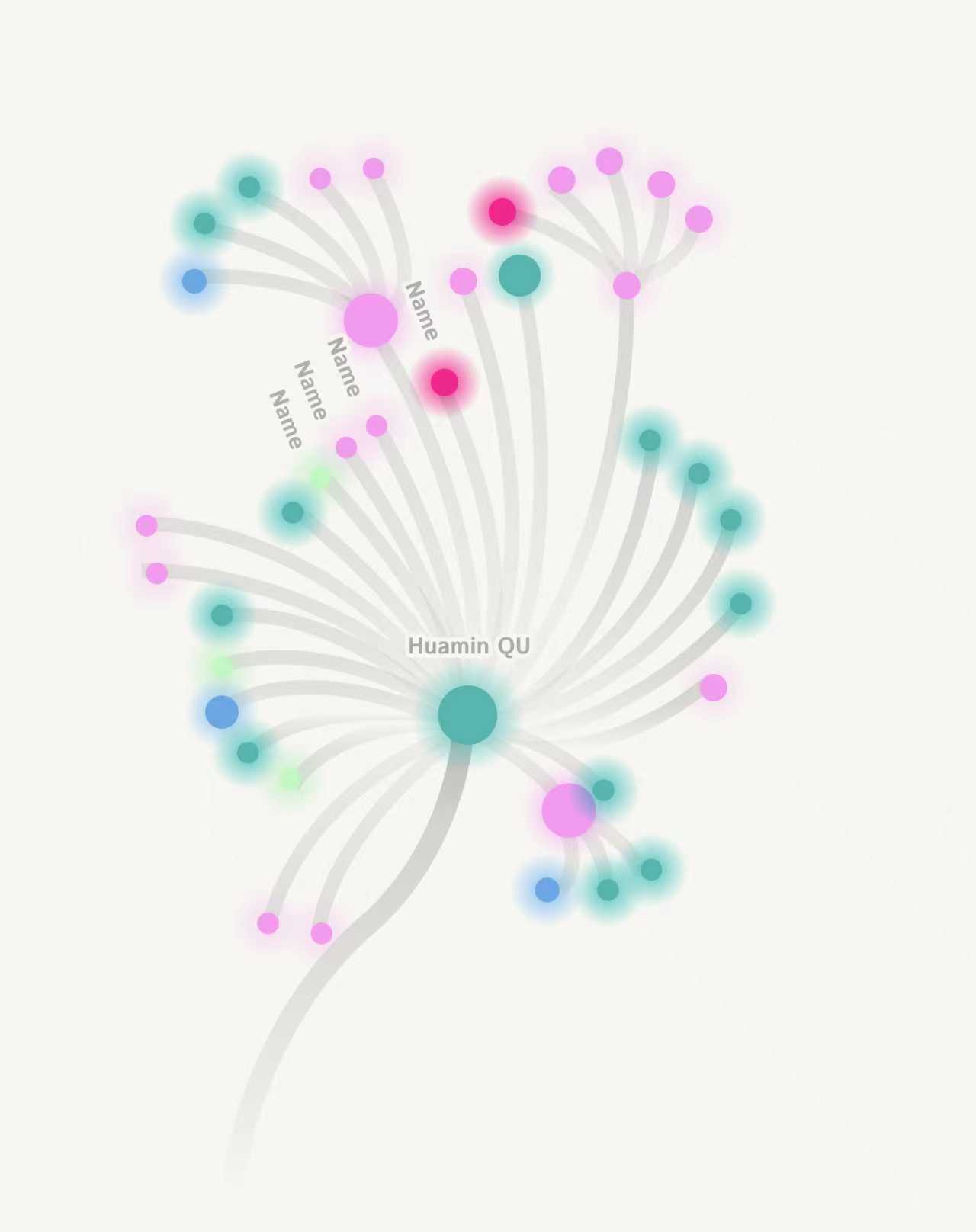
Later, I came across the p5.brush library. I liked it immediately and decided to stylize the visualization with a hand-drawn, watercolor-like texture. This felt like a nice and rather rare application of non-photorealistic rendering in the context of personal visualization ;-).

Making Process
Before setting up the installation, I spent much time tweaking the dandelion details, including the stroke width, colors, and seed sizes. I tried my best to capture the feeling of hand drawings.
Then Xinyu helped plan and book all the materials. Based on the visualization, we decided on the A3 print size, then deduced the bulb groups needed. For the convenience of Prof. Qu, we also ordered a chargeable battery. The animation program was written by AI, given a description detailing the five phases in the light animation.
Turning a digital visualization into a tangible artifact is always messier than it looks on screen. Capturing the exact, weightless feeling of seeds scattering in the wind required endless iterations. We found ourselves caught in a loop of fine-tuning parameters, flashing the code to the Arduino, rebooting the installation, and simply stepping back to see if the rhythm finally felt right.
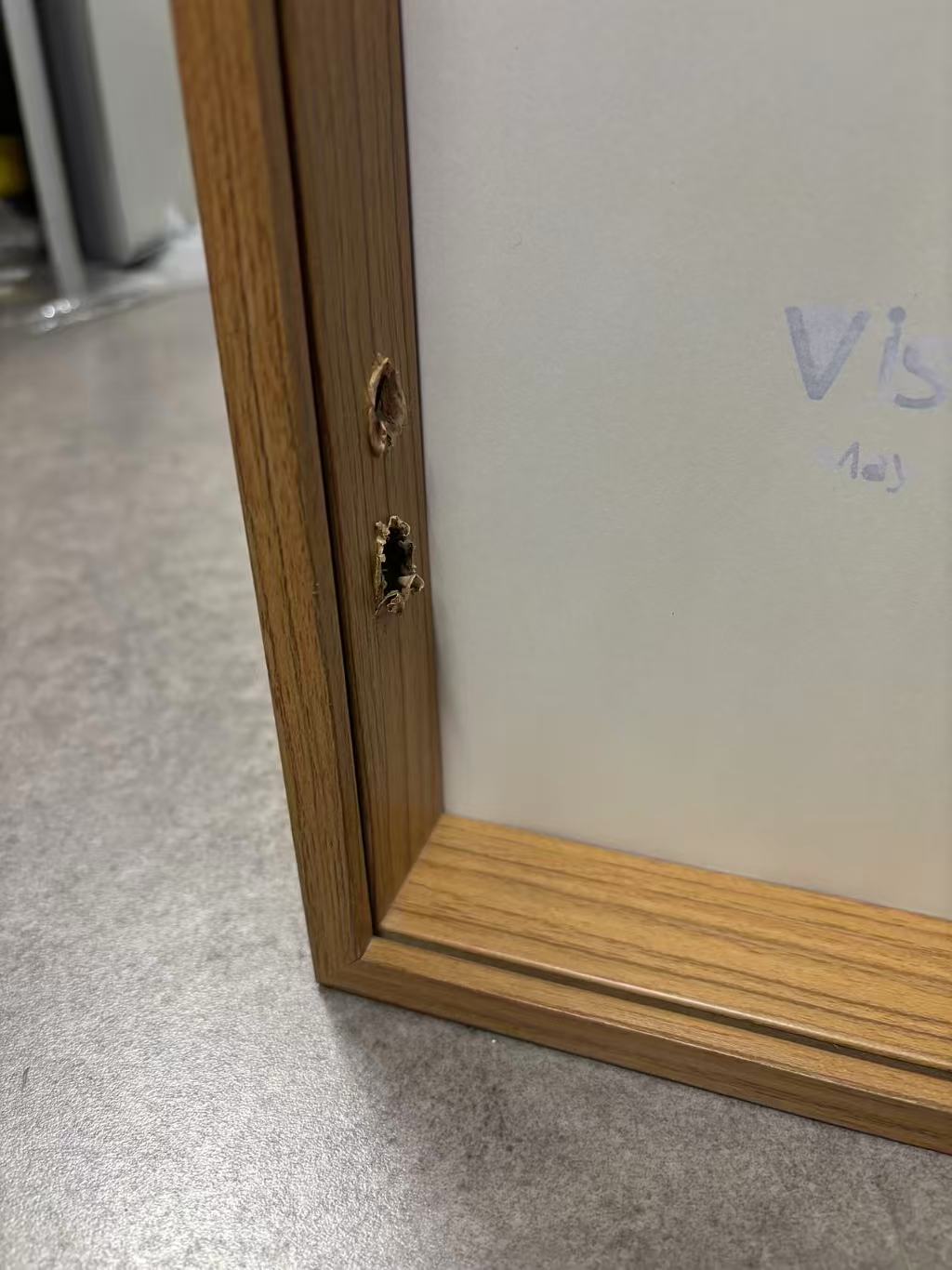
Actually, the most painful step is to drill holes in the frame I bought. The frame was intended for dried flowers, so I have to make space for the type-c charging line and the rectangular switch. And setting up the electrical conductor is also an art to avoid blocking the lights.
Besides, I made a QR code in our signature blue color for the interactive website featuring the VisLab logo and had it 3D printed. Then I pasted it next to the switch. In this way, the physical and the virtual dandelion are seamlessly bridged.
One hardware detail I overlooked was the depth of the frame. The physical distance strongly diffused the light, weakening the overall ambiance. Because I didn’t have materials to pad and elevate the backboard, some lights are barely visible. In future iterations, I would attach the LEDs directly onto the back of the paper instead of trying to raise the circuit board from behind.
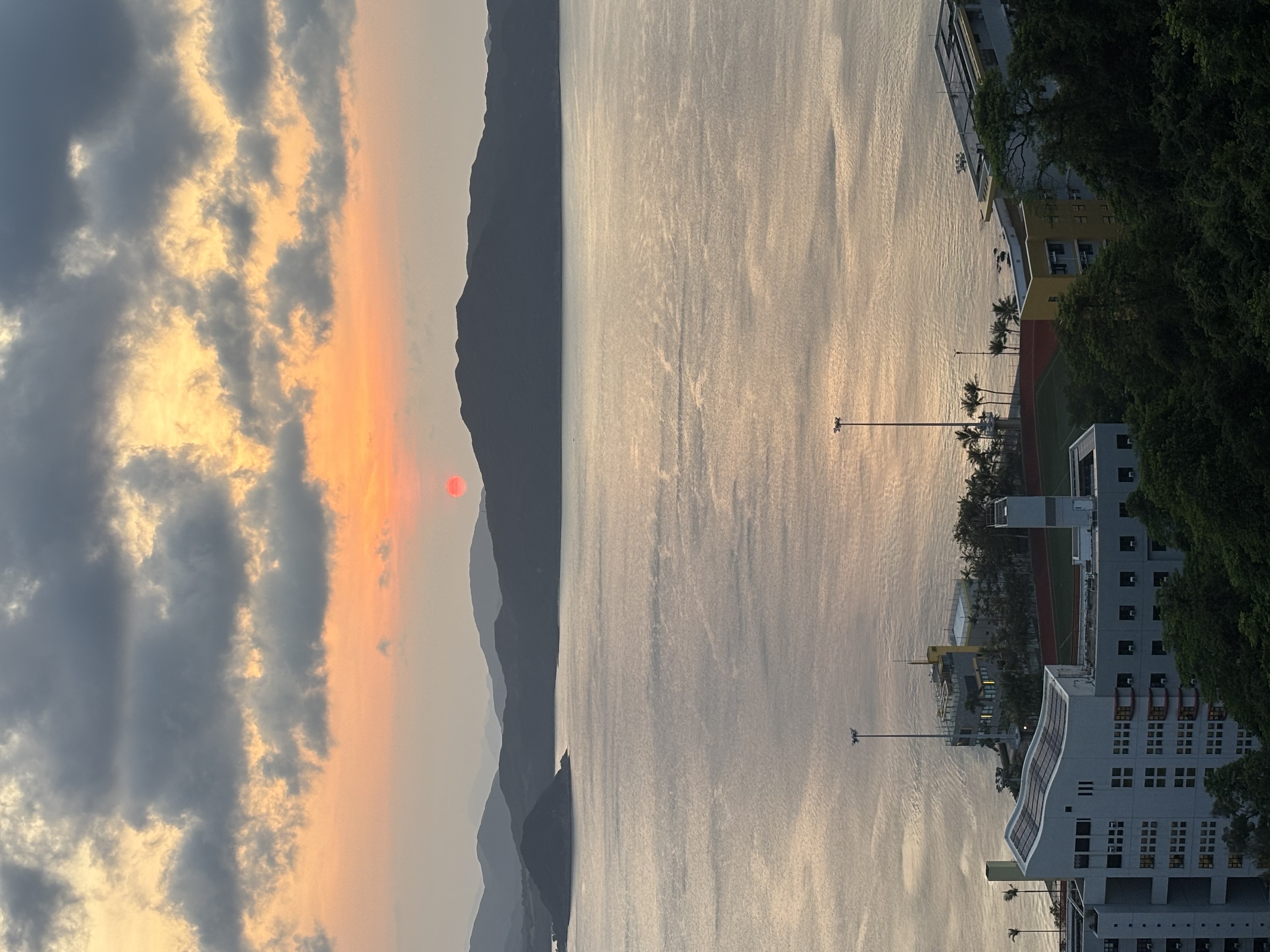
It was an exhausting night to assemble everything together. But I also got a chance to see the breathtaking sunrise once again over the Clear Water Bay. It was a bittersweet realization that this might be my last time greeting the morning sun from this familiar spot. Yet, looking at the glowing dandelion in my hands, the exhaustion felt entirely worth it.
Credits
This work was not done entirely by myself. Jason initiated another project featuring academic family tree of VisLab and curated the dataset. Hanlu helped refine the graph layout to vivify the dandelion metaphor using the spiral shape. Wenshuo printed the static visualization. Xinyu Zhang spent many nights with me to plan and finalize the circuits and 3D print the QR code. And thanks a lot to Claude Code, for sure 😉. The blogs by Jie Qi and poppy.oceanblue also helped a lot. And I referred to the colors in zhongguose.
Code & Components
The source code is available on Github: https://github.com/shellywhen/Academic-Family-Dandelion
If you are interested, here is a list of materials I used.
- Illumination: 11× Green and 8× Ice Blue pre-wired SMD LEDs (0805 package), plus 4× WS2812 RGB LED rings (7 LEDs each).
- Components: 20× AO3400 N-channel SMD MOSFETs (with SOT-23 to DIP adapters), 10× 10V 1000µF aluminum electrolytic capacitors, and multiple 1/4W metal film resistors (220Ω, 330Ω, etc.).
- Power Supply: 1× 5V lithium battery module (16800mAh, 3A) supporting simultaneous charging and discharging.
- Wiring: 22 AWG tinned copper wire, prepped using a 6-inch wire stripper.
Looking Back
It was an unforgettable experience doing this personalized physical visualization. I see potentials in extending this static piece to an animated one using physical simulation and align the animation rhythm with music.
What a fantastic closure to my Ph.D.! Now it is time to sail again.